
Linocut print, A4, limited edition of 30
From the series The Lost Choice
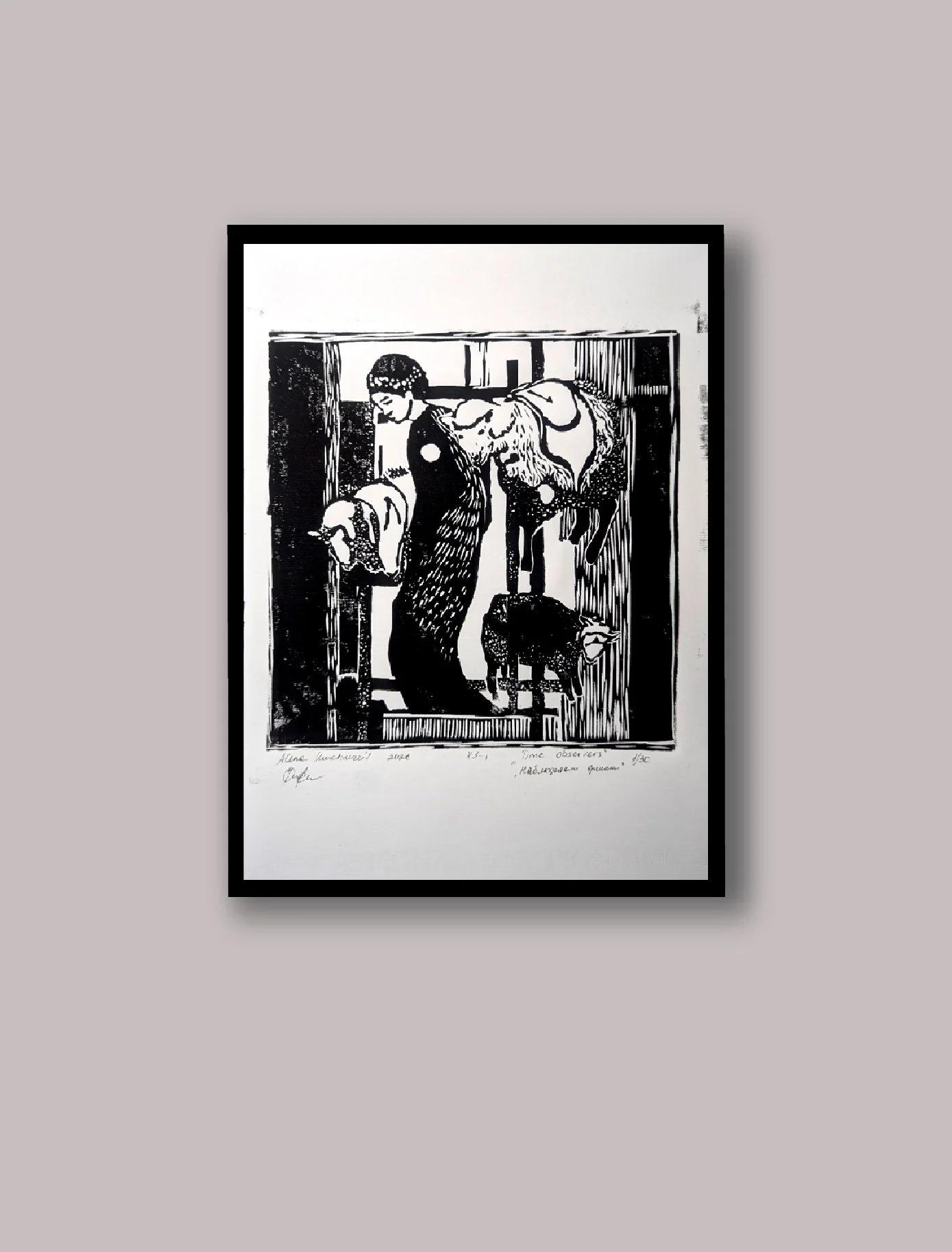
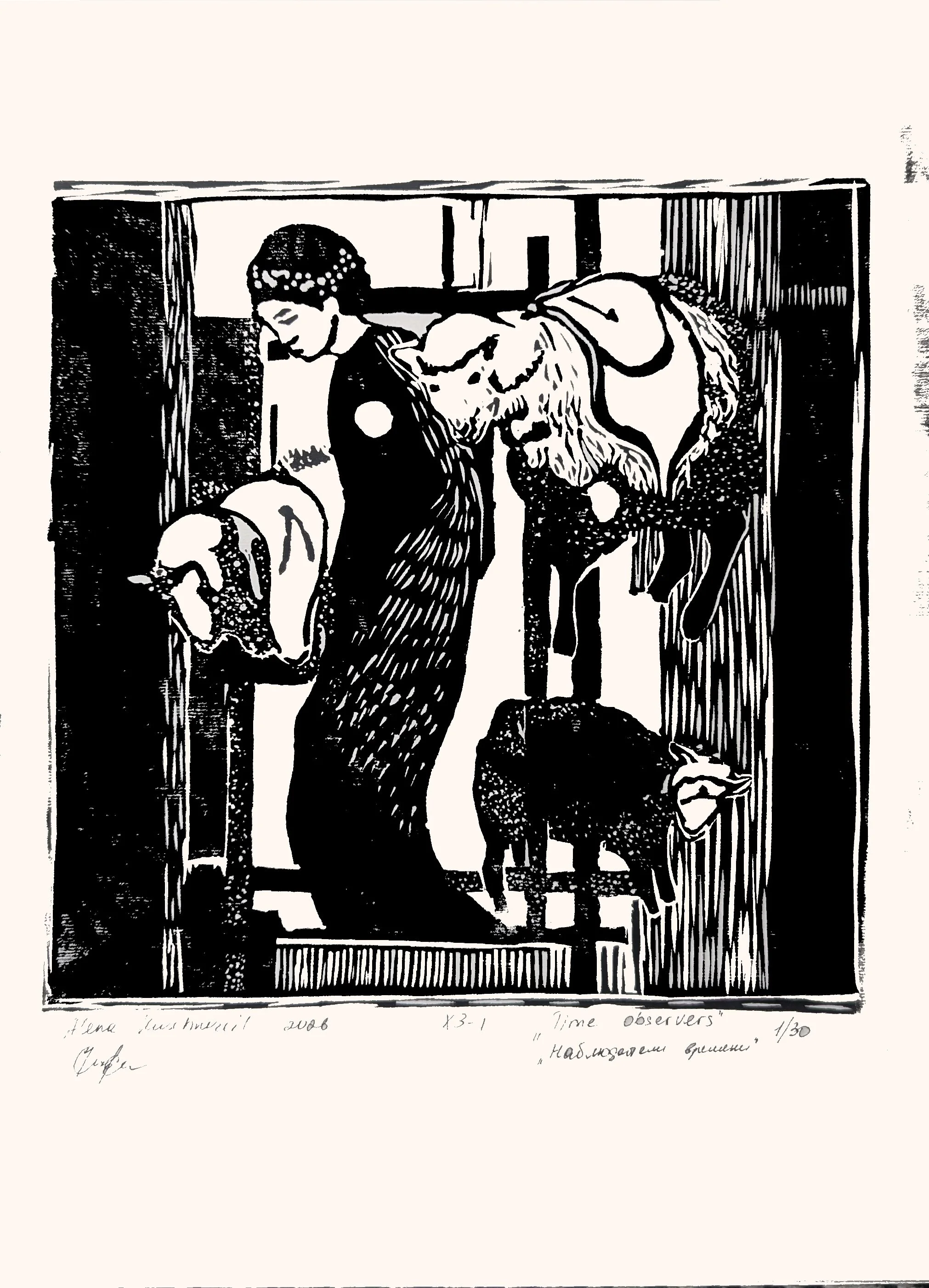
This linocut presents a grown woman accompanied by two lambs — an image that echoes the symbolism of innocence introduced earlier in childhood. In this work, however, the figure appears in a later stage of life. What once represented purity and vulnerability now returns as memory, responsibility, and experience carried through time.
Behind the figures, blurred circular forms suggest clocks or dissolving fragments of time. The image evokes a sense of time that is soft and fluid, impossible to grasp or hold. It stretches, fades, and slips away, leaving only traces.
The lambs remain symbols of innocence, yet in this composition they appear heavier, almost inseparable from the woman’s presence. What once belonged to childhood becomes something that accompanies a person throughout life — a quiet inheritance of the past.
Within the context of The Lost Choice, the work reflects on lost time, irreversible decisions, and the way experiences accumulate within a life. It speaks about the moment when one understands that some choices were never truly available, and that time itself carries the consequences forward.
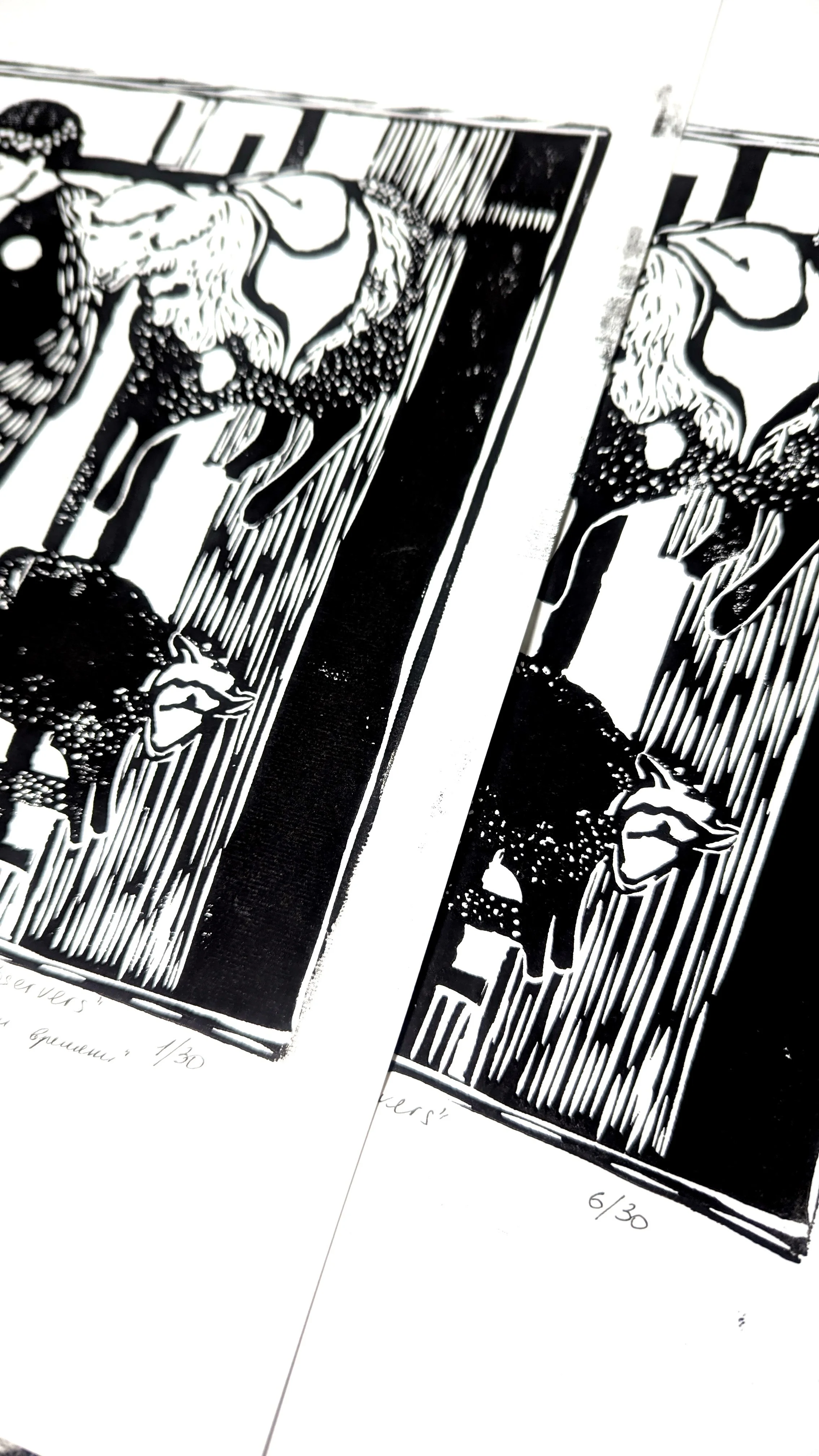
The stark black-and-white language of the linocut intensifies the emotional tension of the scene, balancing tenderness with the weight of memory.
Linocut print, A4, limited edition of 30
From the series The Lost Choice
This linocut presents a grown woman accompanied by two lambs — an image that echoes the symbolism of innocence introduced earlier in childhood. In this work, however, the figure appears in a later stage of life. What once represented purity and vulnerability now returns as memory, responsibility, and experience carried through time.
Behind the figures, blurred circular forms suggest clocks or dissolving fragments of time. The image evokes a sense of time that is soft and fluid, impossible to grasp or hold. It stretches, fades, and slips away, leaving only traces.
The lambs remain symbols of innocence, yet in this composition they appear heavier, almost inseparable from the woman’s presence. What once belonged to childhood becomes something that accompanies a person throughout life — a quiet inheritance of the past.
Within the context of The Lost Choice, the work reflects on lost time, irreversible decisions, and the way experiences accumulate within a life. It speaks about the moment when one understands that some choices were never truly available, and that time itself carries the consequences forward.
The stark black-and-white language of the linocut intensifies the emotional tension of the scene, balancing tenderness with the weight of memory.